

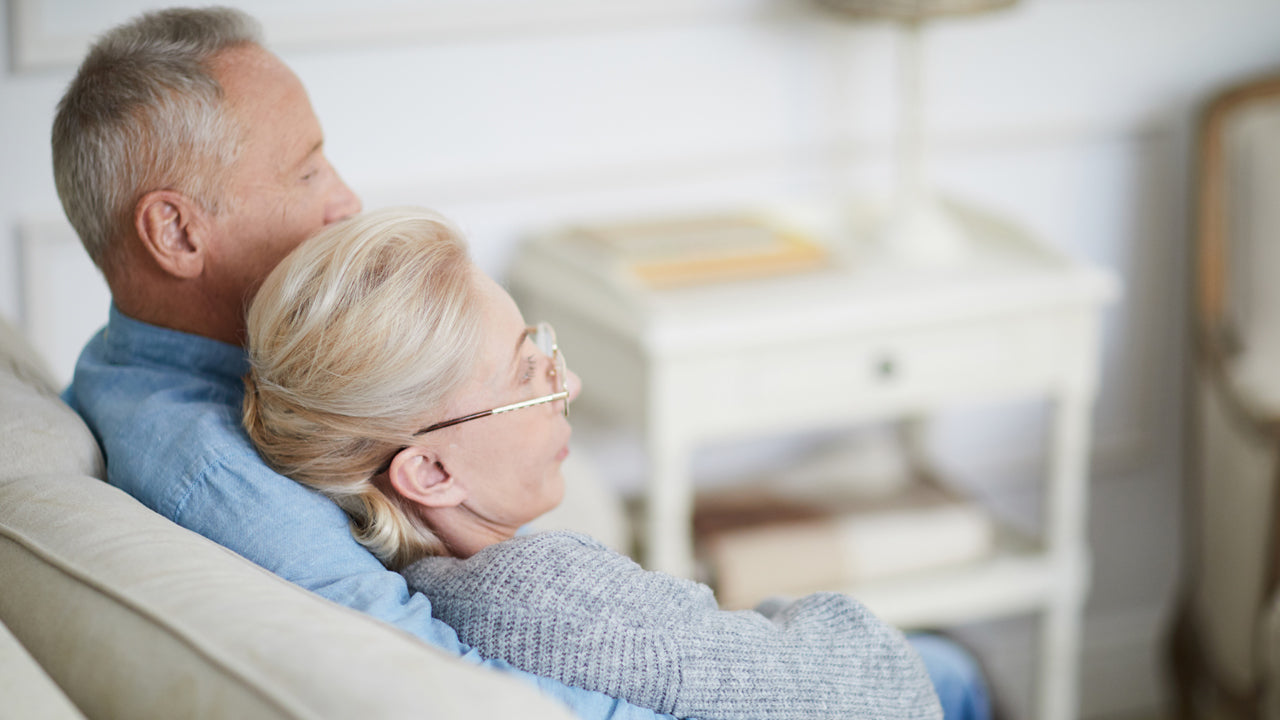
Finding Joy When Memory Fades
There’s a quote that I come back to again and again, from a woman called Naomi Feil, who dedicated her life to understanding dementia. Her work is certainly worth a read. She said: “Connection doesn’t depend on memory, it depends on presence.”
I’ve thought about that a lot. Because one of the hardest things about watching someone you love move through dementia is the fear that connection becomes impossible. That when the memories go, the relationship goes with them. That the person you knew is somehow out of reach.
If I’m perfectly honest, it really does feel like that sometimes. However, we make a point in our group sessions to try and find those moments of connection. No matter how small, no matter how fleeting — those moments do exist and they are worth looking for.
It’s About Moments, Not Memories
What I’ve seen is people finding their loved ones in unexpected places. In a piece of music that makes them light up, that's always Tease Me by Chaka Demus & Pliers for my mum. It could be in the smell of something familiar like a perfume, a favourite meal cooking on the hob. In the feeling of holding someone’s hand, even when they can’t quite place who’s holding it. The senses reach somewhere that logic and language can’t always get to, and that’s a remarkable thing.
When we talk about creating moments of joy in dementia in our sessions, the first thing I try to shift is the framing. We’re not creating memories — we’re creating moments. The difference matters. A moment doesn’t need to be stored or recalled to have been real. It doesn’t need to be remembered to have had value. A minute of genuine laughter, a song that lights them up, a familiar smell that brings a few seconds of peace. Those things are real, even if they’re not remembered.
How to Engage Someone With Dementia Through the Senses
Meaningful moments in dementia tend to share three things: they’re personally relevant to the person, they’re emotionally engaging, and they’re achievable given where that person is right now. That last one is important. The goal isn’t to recreate who your loved one used to be. The goal now is to meet them where they are today, in this moment, with what they can still access and enjoy.
That means shifting your mentality to focus on what your loved one can do, rather than can’t do. It means adapting rather than stopping. Someone who previously loved baking might not be able to follow a recipe anymore, but they might still love the smell of something in the oven, or enjoy the simple act of stirring. Someone who loved gardening might not manage the whole garden, but a pot of herbs on the windowsill might still mean something.
Sensory stimulation for dementia at home is where I’ve found the most hope in all of this. Touch — holding hands, a gentle arm around a shoulder, a pet curled up beside them. For my mum, I know that when I come through the door, I send my dog Orla in first — that immediately puts her in a good mood. Hearing Orla tippy-tapping on the laminate flooring also acts as a pre-warning I’m coming. Then, I give her a big hug. That seems to be enough to make her feel better.
Music and dementia connection is incredibly powerful — it seems to bypass so much of what dementia takes. Then we move to smell — there’s something about a familiar scent that can unlock a response nothing else can. Chanel No. 5 for my mum. It’s a smell that brings back something for us both. Sharing a moment looking at the same thing, having photographs around the house — these are great sources of connection. These aren’t workarounds or substitutes. They’re real forms of connection.
The Moments That Catch You Off Guard
The moments that catch you off guard are often the most powerful ones. Someone in our group told me about their mum suddenly singing along to a song, word perfect, when she hadn’t spoken clearly in weeks. Another talked about a shared laugh over something completely silly — a proper laugh, the kind that reminded them of who their mum had always been.
Those moments don’t erase the hard days. But they sit alongside them, and they matter.
What I’d say to anyone reading this who feels like connecting with someone who has dementia is slipping away: keep looking for it. It might not look the way it used to. It might arrive through a different door than the one you’re used to. But it’s still there.
You don’t need a shared memory to share a moment. You just need to be present for it.
Founder of Dementia Life