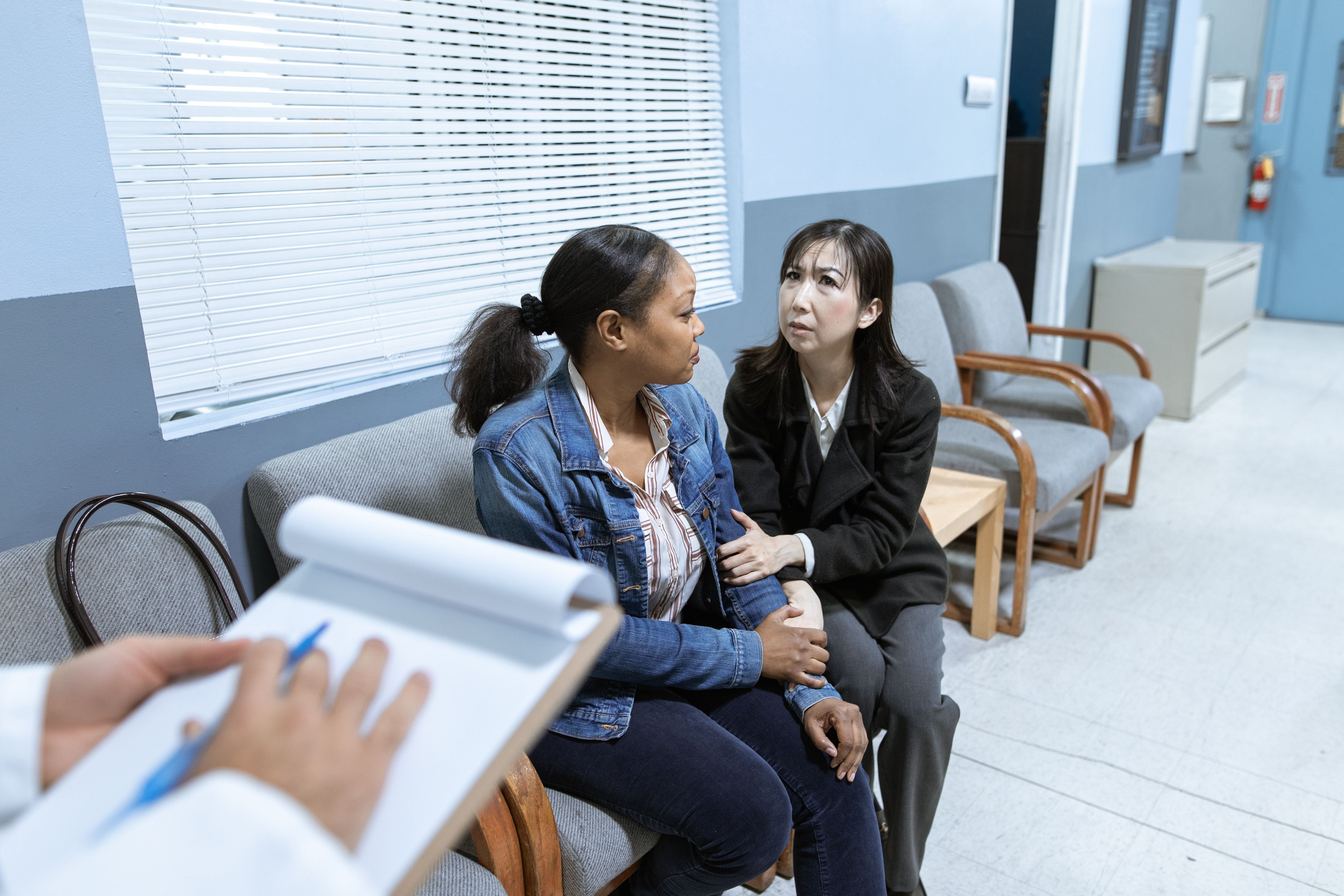

Do you smoke? How much do you smoke? Have you thought about quitting smoking? Do you drink? How much do you drink? Do you exercise? How much do you exercise? How is your diet? Blood pressure. Blood test. Bye.
Not a single mention of the word “dementia”.
This was mum’s second annual dementia review. Since the doctors phoned a week ago to book this in my mum has been stressed and being stressed highlights mum’s Alzheimer’s more. This culminated on a phone call to her on the morning of the review, where I wanted to make sure she’s okay, tell her I was leaving and would be there soon and she could barely get a word out. Never mind a sentence.
If this is what annual reviews are going to be moving forward we won’t be going. What bothered me almost as much as a dementia review that didn’t mention dementia was that all of this, with the exception of a blood test, could have been done at home. There could be a form we fill in and send off. The entire week of mum pacing around the kitchen table, or working herself up so much that making a cup of coffee seems like an impossible task, all of that would be gone. Half of that my dad or I could fill in without mum’s input.
While we were walking home from the GP’s surgery, I was quietly seething. But said to mum, “see nowhere near as bad as you thought”. Maybe this experience will make mum less nervous the next time she has to see a doctor. Or maybe she’ll have forgotten by then and she’ll be pacing round the kitchen again. This whole fiasco did get me thinking about what a genuinely useful dementia review would be. One that takes patient, and patient’s family into consideration. The truth is I’m torn, I’m torn between this being a service the GPs should offer and the thought that this should be a service outsourced to a charity like Dementia UK. This entire review with my mum at the GPs took less than ten minutes and ten minutes is not enough to cover the complexities of dementia.
An annual lifestyle and medication review at a GPs is necessary. Many people with dementia are older, and therefore take medication for a variety of illnesses. My grandad didn’t have dementia when he died but he took enough pills per day that he rattled when he walked. That will need a regular review, as in some cases other medication could have an impact on the symptoms of dementia. But what if the dementia side of the review could happen in your own home, with a trained admiral nurse? Where they could spend 45 minutes or an hour, talking to you, listening and giving real-world practical advice. If you’re struggling with your loved one sundowning, 10 minutes in a doctor’s surgery isn’t enough to get through the experience, never mind the possible solutions. You could explain that to someone trained, while holding a cup of tea in your favourite mug and get advice about ensuring there’s sufficient light in the mid afternoon and maybe have a lamp on in the living room just before sunset.
If these meetings took place in your own home, there would be absolutely nothing to stop the nurse having a quiet word with the husband, wife or you could even have the whole family there. The person with dementia could be taken to another room and the family could speak freely about their concerns. Prior to attending this meeting with mum, my only experience of seeing an annual review was on Louis Theroux’s documentary Extreme Love: Dementia. As with a lot of his work it was based in the states but there was a couple, Selinda and Glen. Selinda was 49 when she was diagnosed with Young-Onset Alzheimer’s. Selinda is asked to do some tasks, draw a clock face and name 3 animals – this, I know would throw mum into a spin and if the outcome is to know what stage mum is at, I’d rather not know. But what intrigued me more was that the doctor had a separate, one-to-one meeting with Glen. Getting Glen’s perspective really showed the strain he was under in the show. I know that this dementia review was American, and probably expensive. But that was a dementia review.
I just want to keep mum as happy as she possibly can be and that’s hard when she has dementia. It’s harder still that she knows she has dementia and used to work caring for people with dementia. Milestones. Progress. Future planning. They could all be discussed with someone trained. This week, it didn’t help mum and it didn’t help me.
Founder of Dementia Life